01
Packing a base in sugar sand
We shape and compact the subbase through Clearwater's loose Gulf-side sand so the slab spreads its weight flat and even, including the stretches where groundwater rides just below the surface.
A driveway that carries the weight and clears the water on flat, low Gulf ground. We lay it deep over a packed sand base, run structural fiber and welded wire mesh through it, and grade it so storm and surge water sheds off rather than working under the slab.
Tear-out, forms, base, reinforcement, pour, screed, broom, joints, cure. The whole job, in 3D.
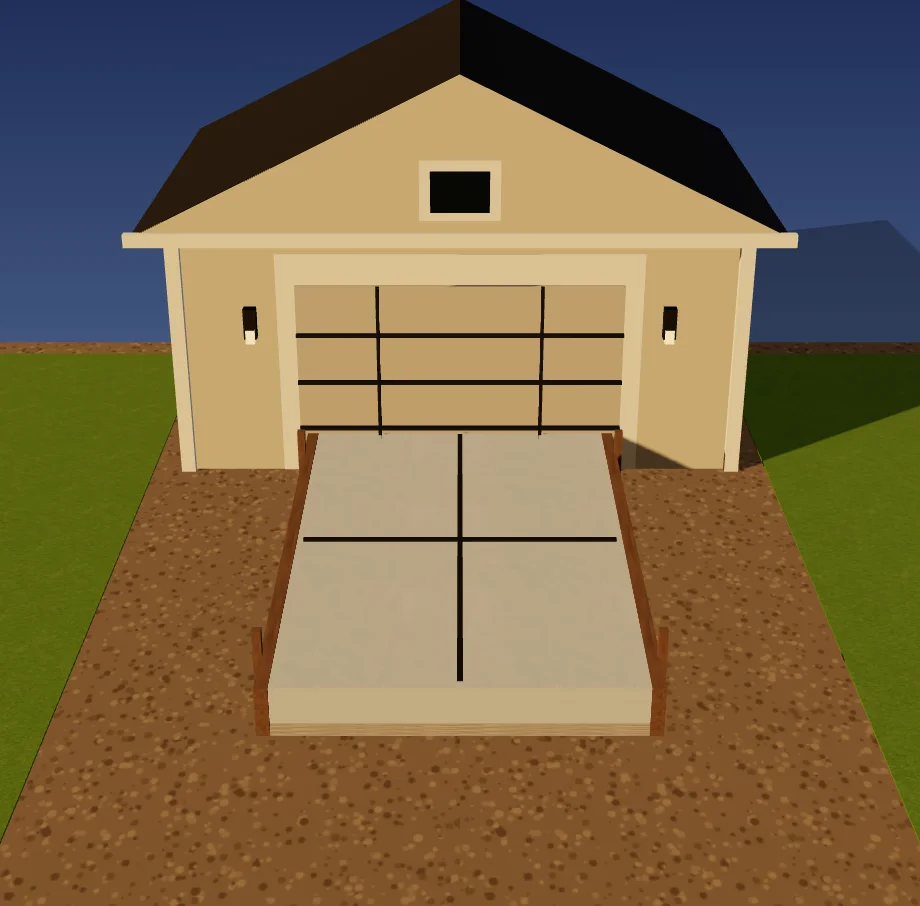
Drag the handle to reveal the finished pour.
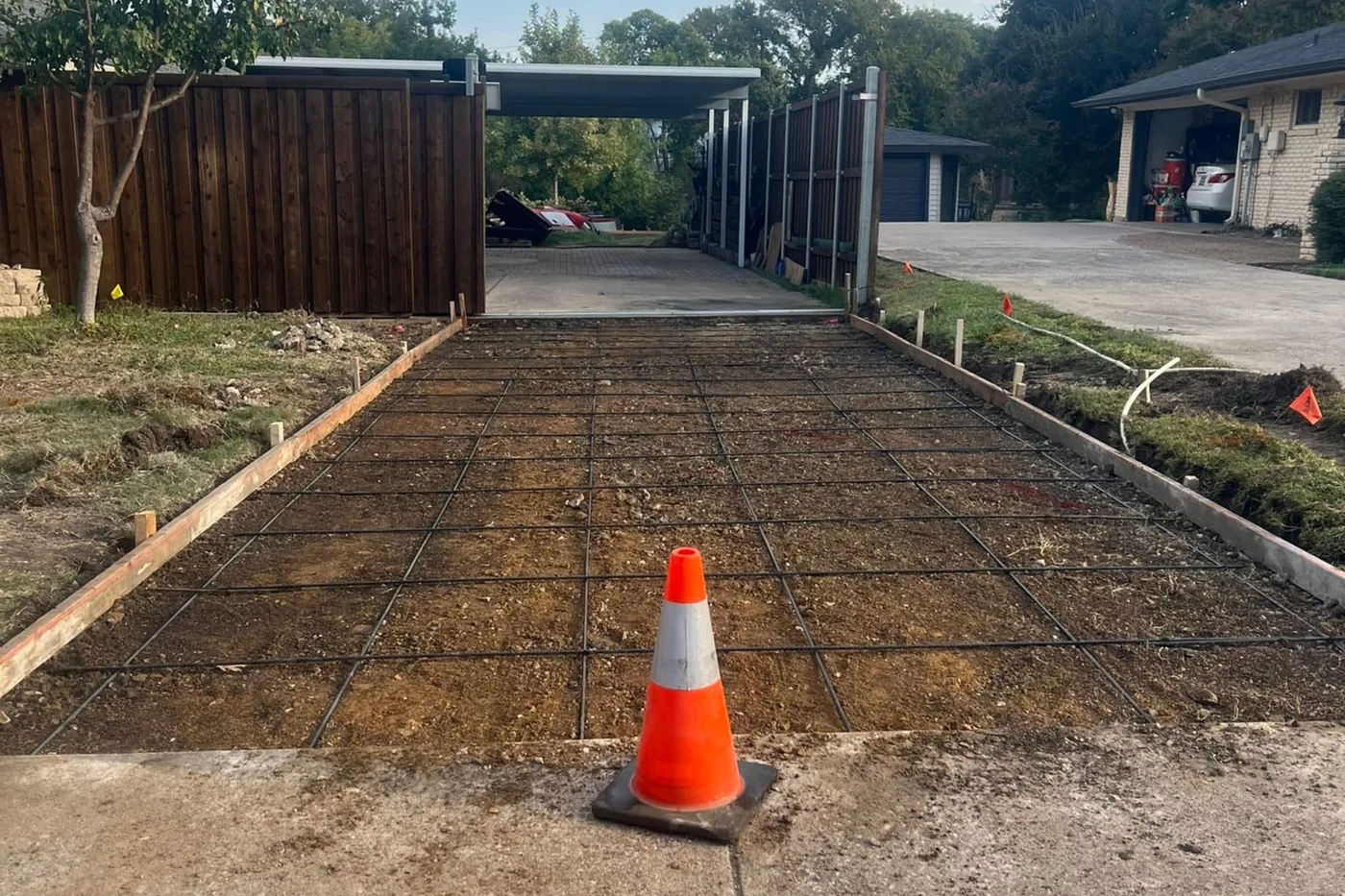
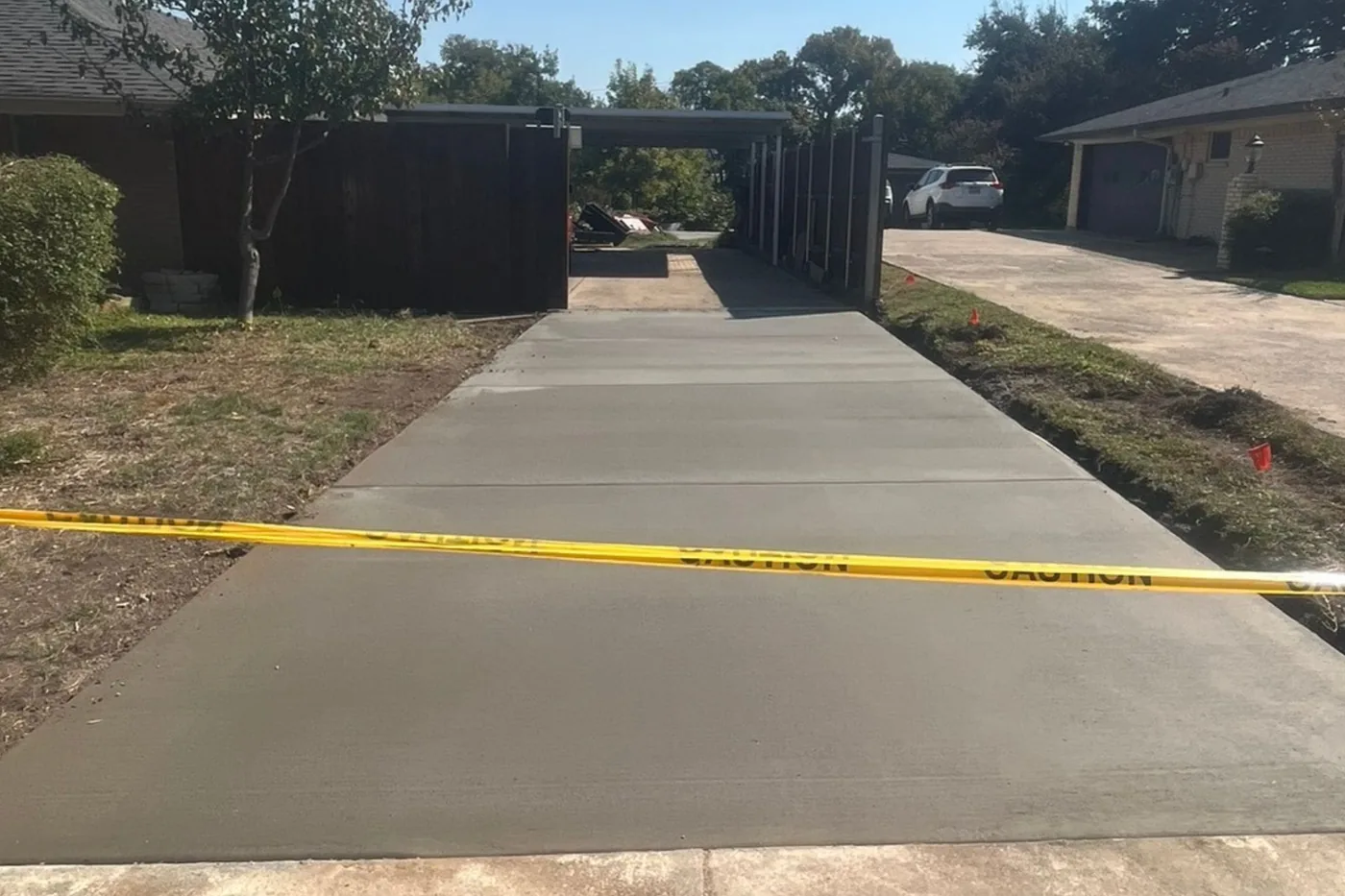
Credibility comes from how it's built, not from promises. Here's the order of operations on every concrete driveways job.
We shape and compact the subbase through Clearwater's loose Gulf-side sand so the slab spreads its weight flat and even, including the stretches where groundwater rides just below the surface.
A driveway pours deeper than a patio, set to the cars, trucks, and the boat trailer that park, roll, and swing on it through the week, all of which press far harder on the slab than backyard furniture ever does.
We carry the driveway on structural fiber spun through the batch and welded wire mesh laid across the slab to spread the wheel loads and knit the surface as one, the way Florida flatwork goes down in no-freeze sand. Rebar is the answer for structural slabs, not a home driveway, and the less buried steel sitting in open-Gulf salt air, the less there is for corrosion to find.
Expansion and control joints take up the movement, and we pitch the slab so storm and surge water heads for the street and the apron instead of backing up on top or against the foundation.
We give you a solid drive-on date and cure the pour with Gulf heat and salt-laden humidity factored in, so the slab firms all the way through rather than skinning over up top before the body sets below.
Most contractors vanish after the deposit. We pick up the phone, show up when we say, and stand behind the work after the truck leaves. The follow-through is the difference.
A foreman we know runs your job and a vetted crew does the work, managed by Lucky's, one company accountable from the first call to the final walkthrough.
COI and lien waivers on file before we break ground. The documentation that lets commercial clients pay and gives homeowners peace of mind.
Prepped subgrade, reinforced and mixed to spec for the job, and proper curing. We build credibility through the process, not promises. On concrete driveways, that starts with packing a base in sugar sand.
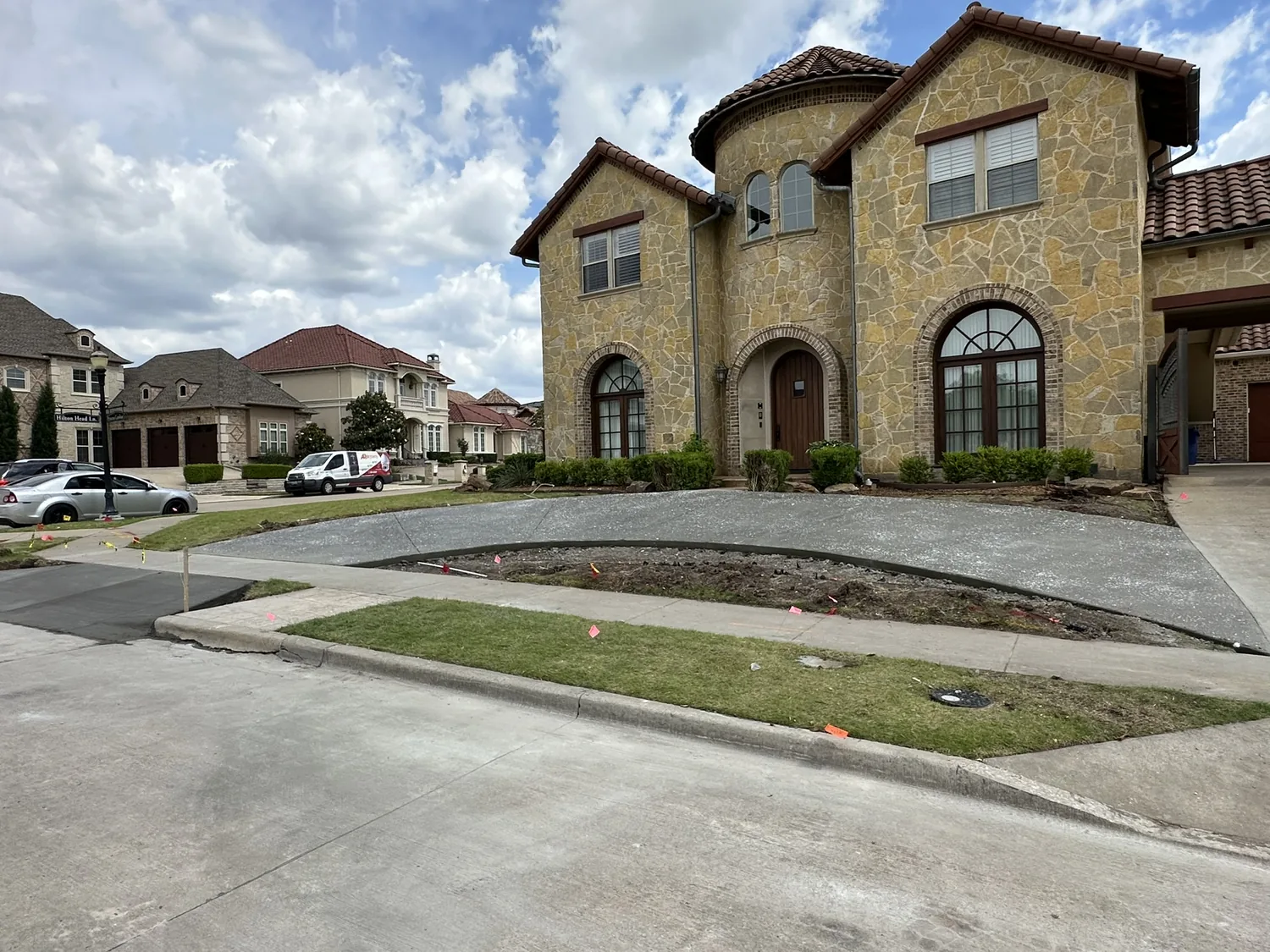
A Clearwater driveway runs past a plain flatwork quote because it is built for the sand and the surge: a base packed over a shallow water table, structural fiber and welded wire mesh, sawn joints, and a grade that carries storm water off. As a starting band, standard residential driveways tend to sit around $8 to $14 per square foot, with decorative finishes or a heavy tear-out climbing above that. From there the price tracks square footage, a 4 to 6 inch depth, the finish, and whatever demolition the old slab needs. We set the figure after walking the site, not over the phone.
On a residential driveway we use structural fiber blended through the concrete and welded wire mesh laid across the slab, the standard Florida method in our no-freeze sand. That pairing carries the wheel loads and binds the surface with no call for a heavy steel rebar grid, which we keep back for structural and heavy-load work. On the open Gulf, where salt rides straight onto the lot, holding back the buried steel also leaves corrosion less to chew on.
Two fronts at once: a base packed over our loose Gulf-side sand so the slab is neither dropped nor lifted from beneath, and fiber plus welded wire mesh with sawn joints so whatever movement arrives stays inside the lines. We also grade the slab so water leaves it, since sand soaked unevenly under one corner is the short path to a crack.
Over time it can. Water that lingers on or beside the slab keeps the sand soaked unevenly and gnaws at the edges and joints, and a surge event can leave water standing across the surface for a stretch. We grade the pour and the approach to clear it and set the base with the shallow water table figured in.
Walk on it first, drive on it later, because concrete keeps building strength well past the point it looks done. We hand over the dates for your pour, keyed to the heat and salt humidity it cured in.
Yes. We bundle the demolition, the haul-off, and the new pour into one quoted job. A slab split across the middle or dropped in spots usually traces back to a base or drainage fault, and we correct it as part of the rebuild.
You'll hear back from a real person, usually the same day. No call center, no runaround, no chasing us down.
Booking up fast this season. Or call (727) 349-5694